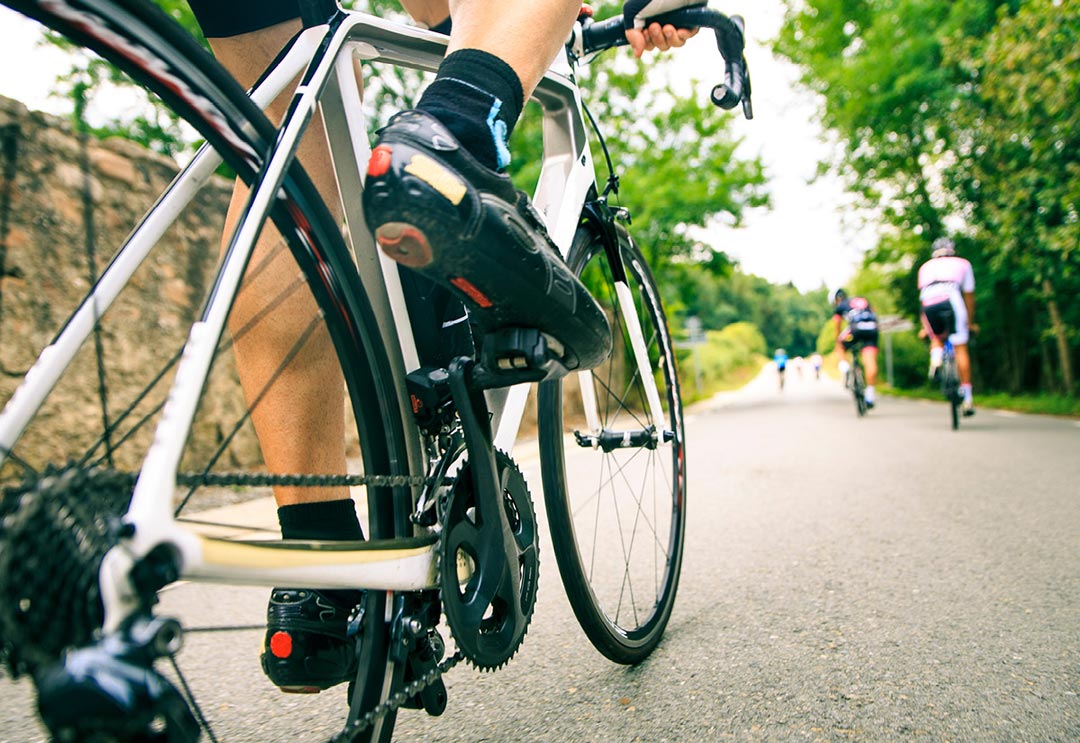
Bicycling is one of the best and most enjoyable ways to stay fit, explore nature, cut down on fuel costs, and help the environment. The advantages of this lifelong activity seem limitless. However, to continue reaping these benefits safely, cyclists should follow essential biking tips for road safety to navigate the various risks that come with sharing the streets with motor vehicles. Taking the proper precautions will ensure a safer, more enjoyable ride for years to come.
Before riding, be sure your bike fits you properly. A bike that fits well and is right for your height, flexibility, and riding style is a bike you’ll love riding. Conversely, a bike that fits poorly can lead to inefficient riding, muscle aches and pains, and general uneasiness that might discourage you from riding.
The most important safety tip for a bicyclist: Protect your noggin no matter how short the trip! Cyclists who wear a helmet reduce their risk of head injury by an estimated 60% and brain injury by 58%.
Here are a few other biking tips for road safety that will help keep you safe on the road:
- Get familiar with traffic laws. Cyclists must follow the same rules as motorists. Always be courteous and take your turn.
- Know your and your bike’s capabilities.
- Ride single-file in the direction of traffic and watch for opening car doors and other hazards.
- Use hand signals when turning and use extra care at intersections.
- Wear bright clothing.
- Night riding can be fun and safe. Remember to use front and rear lights and wear reflective clothing.
- A bell is important to have when riding on trails to alert others you are approaching. It’s also effective when riding in traffic.
- Plan your routes to take advantage of trails, bike paths, and lightly traveled streets.
- Always be predictable to drivers in traffic — they should never guess what you’re going to do.
- Always assume a car doesn’t see you until you make the judgment that it’s safe to proceed.
- Once you know the fundamentals of road cycling, you can start to delight in using a bike for everyday trips to work, school, or to visit friends.
Here are 3 key measurements you need for a proper bike fit.