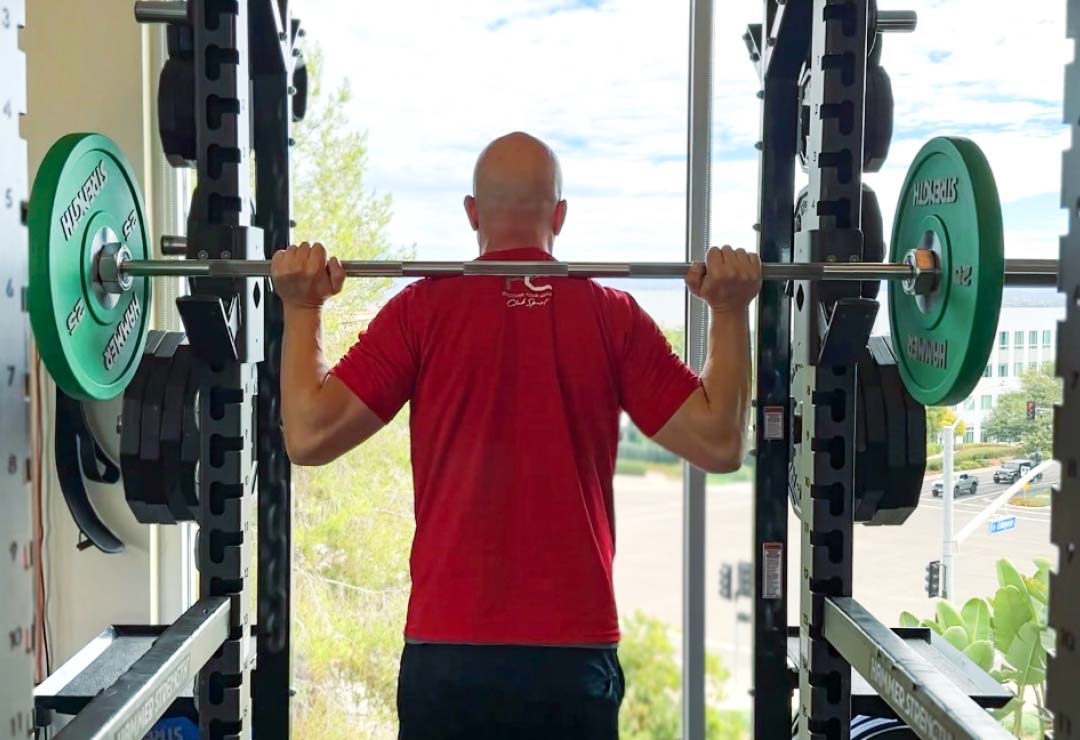
Mastering the squat rack setup is a small but essential detail that can make a big difference in your workout. Not only does it improve your safety, but it also optimizes your efficiency and helps you focus on your lifts without distractions. Here are two common mistakes to avoid and tips to ensure your squat rack is adjusted perfectly for you.
Mistake 1: Setting the Safety Bars Too Low
Safety bars are your backup plan in case you can’t complete a lift. Unfortunately, many lifters set them entirely too low, rendering them ineffective. If the safety bars are only a few inches off the floor, they won’t do much to catch the barbell in an emergency—and that’s exactly when you need them most!
How to Fix It:
The safety bars should be set just a few inches below the lowest point of your squat. To find this height:
- Unrack the Bar and Practice Your Range of Motion: Perform a bodyweight squat or one with a barbell to identify the lowest point you’ll reach.
- Adjust Accordingly: Position the safety bars just below this point. This ensures the barbell has just enough clearance for your full range of motion but will still catch the weight if needed.
This adjustment not only protects you but also gives you peace of mind so you can focus on the lift.
Mistake 2: Setting the J-Hooks Too High
Have you ever finished a tough squat set only to struggle getting the bar back on the rack? That’s often because the J-hooks are set too high, forcing you onto your tiptoes when re-racking. This small misstep can be dangerous, especially when you’re fatigued.
How to Fix It:
The J-hooks should be positioned at a height where you can:
- Easily Unrack the Bar: With the barbell resting in the J-hooks, step under it and slightly bend your knees to lift the bar off.
- Comfortably Re-Rack the Bar: After finishing your set, you should be able to re-rack the bar by stepping forward and lowering it onto the J-hooks without excessive effort or extending onto your toes.
A good rule of thumb: The J-hooks should be just high enough that you only need a slight knee bend to lift or place the bar back.
Quick Checklist for Squat Rack Success
Before starting your squats, run through this checklist to ensure everything is set:
- J-Hooks: Positioned so you can unrack and re-rack with ease.
- Safety Bars: Set a few inches below your squat’s lowest point.
- Barbell Placement: Ensure the bar is centered on the rack.
- Spacing: Confirm you have enough room to perform your lift without hitting the rack or surrounding equipment.
Taking the time to properly set up your squat rack ensures your workouts are safer, smoother, and more effective. Don’t rush this step—your body (and your gains) will thank you!
Do you have more questions about squat rack adjustments or other training tips? Set up an appointment with a Personal Trainer today! We’re here to help you lift with confidence.
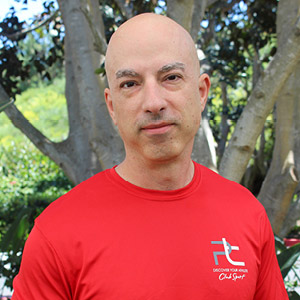
Meet Elite Personal Trainer, Dan Levin
Elite Personal Trainer, Dan Levin, enjoys the challenge of helping clients get the body they want through the easiest, fastest, and safest programs possible while having fun. He has over 10 years of experience in the health and fitness industry and attended the State University of New York at Old Westbury. Dan is a veteran US Naval Electronics Technician and former Video Game Designer. He specializes in body fat reduction, integrated flexibility, and strength conditioning. He combines humor with education and precise instruction.