
Ghee, like butter, has been a staple in kitchens and diets around the world for thousands of years. Yet, with the recent focus on dietary fats and their health implications, many people are left wondering: Ghee vs. Butter, which is the healthier option, and how do they truly compare?
How Ghee and Butter Compare
Both ghee and butter originate from the same source — milk from cows, buffalo, goats, or even yaks. The production process for both starts with churning milk to separate the liquids (water) from the milk fat, resulting in butter.
However, ghee undergoes additional processing. After butter is made, it is simmered on low heat, which removes any remaining water and milk solids (casein and whey proteins, as well as lactose). This process transforms butter into ghee, a clarified, golden liquid fat that boasts a nutty, caramel-like flavor. In essence, ghee is pure butterfat, making it a lactose-free alternative to regular butter.
Ghee vs. Butter: Which Should You Use?
The decision to use ghee or butter often comes down to personal preference, cooking style, and even cultural background. But switching from butter to ghee can offer several unique advantages, especially for those with specific dietary needs.
Benefits of Ghee
In the battle of ghee vs. butter, ghee stands out for a variety of reasons:
- Better Digestibility: Ghee contains medium-chain triglycerides (MCTs), which are easier to digest than the long-chain fats found in butter. These MCTs help burn fat more efficiently and don’t contribute to cardiovascular issues. While butter also contains MCTs, ghee typically has a higher concentration, making it a better option for those focusing on fat metabolism.
- Anti-Inflammatory Properties: Ghee has an alkalizing effect on the body, which promotes a healthier immune response and reduces intestinal inflammation. This makes ghee an excellent choice for individuals dealing with digestive conditions such as leaky gut, IBS, or Crohn’s disease. Studies have even shown that ghee can lower triglycerides and increase beneficial HDL cholesterol.
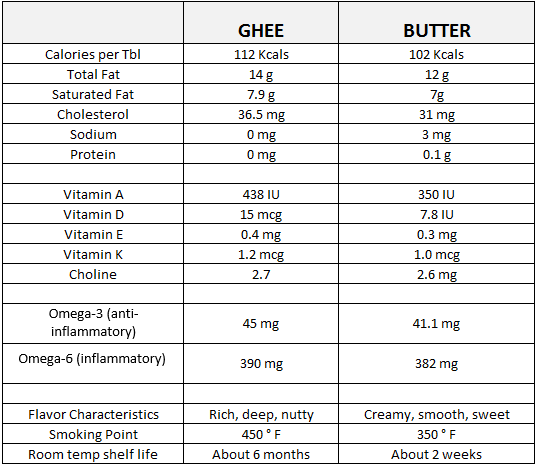
- Rich in Fat-Soluble Vitamins: If you’re dealing with digestive absorption issues, ghee can help. It’s packed with vitamins A, D, E, and K2. Vitamin K2, in particular, is known for its role in bone health and preventing arterial calcification, which butter may not offer in the same concentrations.
- Conjugated Linoleic Acid (CLA): Ghee, especially when made from grass-fed cows, is a rich source of CLA, a fatty acid that has been linked to reduced inflammation, lower cholesterol, and even potential cancer-preventive properties.
- Lactose-Free Alternative: For those who are lactose intolerant or sensitive to dairy proteins like casein or whey, ghee is an ideal substitute for butter. Since the milk solids are removed during the clarification process, most people find that ghee doesn’t trigger dairy sensitivities.
- Higher Smoke Point: In the kitchen, ghee shines with a smoke point of around 450°F, compared to butter’s 350°F. This makes ghee a superior option for high-heat cooking, as it’s less likely to burn and retains its nutrients better during the cooking process.
- Longer Shelf Life: Unlike butter, which needs refrigeration and can only last a few days on the counter (especially if unsalted), ghee can stay fresh at room temperature for up to six weeks without spoiling.
- Rich Flavor: Ghee imparts a deep, rich flavor to dishes, and because it’s so concentrated, you often need to use less of it than butter, making it a more efficient cooking fat.
Ghee vs. Butter: The Bottom Line
When considering ghee vs. butter, the choice ultimately comes down to your health goals and cooking needs. Ghee offers several advantages, from being lactose-free and easier to digest, to having a higher smoke point and longer shelf life. Its rich vitamin content and anti-inflammatory properties also make it a great addition to any balanced diet.
That said, butter still has its place in many recipes and can be a healthy option in moderation. The key is to diversify your nutritional intake and use both fats as part of a well-rounded diet.
Whether you’re sautéing vegetables, baking, or adding flavor to a dish, ghee and butter each bring their unique benefits to the table. Try them both and decide which one suits your palate and lifestyle best!

Meet Elizabeth Parsen
Elizabeth Parsen is a licensed nutritionist through the Academy of Nutrition and Dietetics and is also certified by the American College of Sports Medicine as both a personal trainer and an exercise physiologist. Her nutrition and fitness experience spans more than 20 years, during which time she has finely aligned her practice of nutrition and fitness to develop successful weight loss and wellness programs.